
How to Identify a Fake Online Casino Website
If you ever find yourself drawn to a new casino, a quick check can save you a lot of trouble. For a related reference on this point, mino casino can add useful context. For instance, you might notice a site that claims to offer massive bonuses but doesn’t display any licensing information; a quick search of the domain can reveal whether it is registered in a reputable jurisdiction. In the meantime, a simple test—typing the address into your browser and seeing if the site prompts for a verification step—can often expose a fake casino. For example, visiting demonstrates how a legitimate casino uses a secure connection and clear branding, while a counterfeit version may have broken links or a generic logo.
When a casino website is trying to fool you, the first place to look is the visual polish. Genuine online casinos invest heavily in high‑resolution graphics, professional copy, and smooth navigation. A fake site often copies screenshots from real operators, uses low‑resolution images, and contains typos or awkward phrasing that betray a rushed assembly. Pay attention to how the logo is displayed; a legitimate casino will have a crisp, consistent emblem that matches its branding across all pages, whereas a scammer might use a blurry or slightly altered version to create an illusion of authenticity.
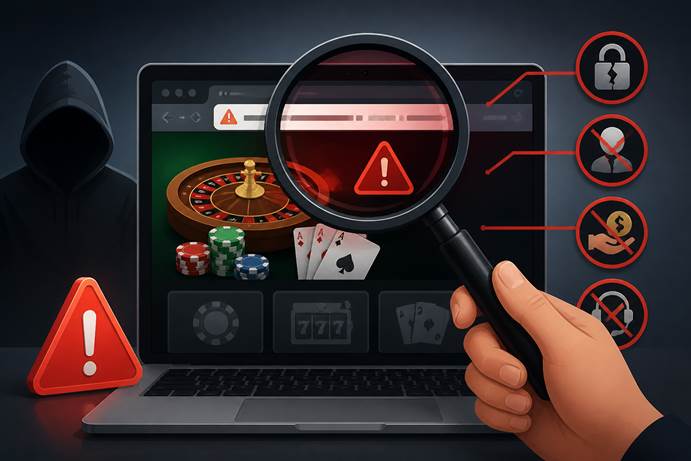
Casino Experience, License, and the User Experience
Licensing is the backbone of any trustworthy casino. Every reputable online casino must hold a license from a recognized regulatory body such as the Malta Gaming Authority, the UK Gambling Commission, or the Isle of Man Gambling Supervision Commission. Look for a clear, clickable link to the license on the footer of the page, and verify that the regulator’s name and the license number match the official records. If the site claims to be licensed but the link leads nowhere or points to a different jurisdiction, that is a red flag. A real casino will also provide details about the jurisdiction’s gambling laws, which can be cross‑checked with public information.
• Look for a clear, clickable link to the license on the footer of the page, and verify that the regulator’s name and the license number match the official records
• A real casino will also provide details about the jurisdiction’s gambling laws, which can be cross‑checked with public information
• Security measures are another reliable indicator
Security measures are another reliable indicator. A genuine casino will use HTTPS, indicated by a padlock icon in the address bar, and the certificate should be issued by a reputable authority. Hover over the padlock to view the certificate details; it should list the exact domain name and the issuing certificate authority. Fake sites sometimes offer a generic or expired certificate, or they may even run the site over plain HTTP, which exposes your personal data to interception. The presence of advanced security protocols such as TLS 1.3, along with a strong cipher suite, is a sign that the casino takes player safety seriously.
Payment options can reveal the authenticity of a casino. Legitimate operators partner with well‑known banks, credit card companies, and trusted e‑wallets like PayPal, Neteller, or Skrill. They provide clear instructions for deposits and withdrawals, and transactions are processed through secure, audited channels. A fake casino may ask you to use a single, obscure payment method, or it may offer instant withdrawals that seem too good to be true. If the site only accepts a cryptocurrency that it claims is “highly secure” but provides no clear proof of its legitimacy, pause and investigate further.
Support: Key Considerations
Customer support is often the last line of defense. Real casinos offer multiple support channels—live chat, email, and sometimes a dedicated phone line—available 24/7. When you reach out, responses should be timely, professional, and consistent with the casino’s policies. A fake site might have a delayed or generic response, or it might refuse to provide a phone number altogether. Test the support by asking a detailed question about a specific game or a withdrawal policy; the quality of the answer can be a telling indicator of the casino’s credibility.
How Community Works
Finally, look beyond the website itself and tap into the community. Search online forums, social media groups, and review sites for player experiences. A legitimate casino will have a mix of positive feedback and constructive criticism, while a scam will often be surrounded by negative reports, unresolved complaints, or a lack of user discussion. By combining visual cues, licensing verification, security checks, payment scrutiny, support evaluation, and community insights, you can reliably distinguish a fake online casino from a trustworthy one and protect your gaming experience.